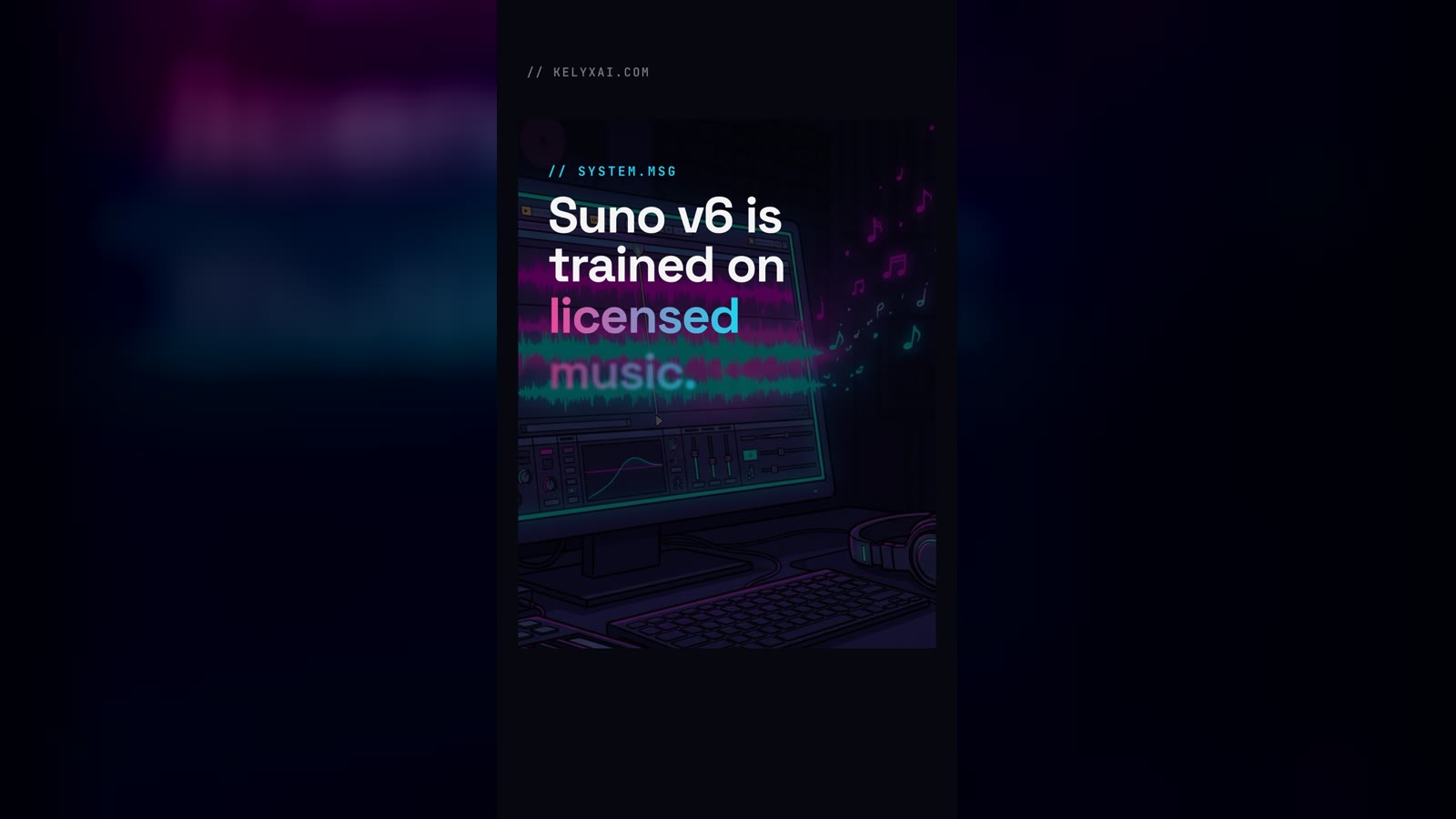
Suno v6 Is Trained on Licensed Music. What That Means for AI Musicians
Suno rebuilt its models on licensed catalogs and retired the old ones. Here is what actually changes for people making music with it, and what does not.
Practical guides and honest writing for creators working across art, comics, books, music, and video.

Kelyx is the home for AI creators — one place to share AI-made art, comics, books, music, and video, built on an open, inclusive, hate-free community. Here is what Kelyx is, who it is for, and how to start.

Suno rebuilt its models on licensed catalogs and retired the old ones. Here is what actually changes for people making music with it, and what does not.

OpenAI shut Sora down this year and is now reportedly discussing a revival through a filmmaker-tools startup. The lesson for AI video creators is less about Sora and more about depending on any single model.

AI video models change, get repriced and sometimes disappear. A practical guide to keeping your prompts, references and masters in a form that survives any single tool.

YouTube Music has added Fully Gen AI, Partly Gen AI and No Gen AI labels to tracks. It is a disclosure system, not a ban, and getting your label right is now part of releasing music.

Deezer is building a toggle that hides AI-generated music from search. Here is what was announced, why it is happening, and three practical moves for creators who make music with AI.

Streaming platforms are adding AI labels and some musicians are protesting AI music outright. Here is how to disclose your process in a way that earns trust instead of losing it.

The AI art landscape has matured fast. Here is an honest, working map of the tools worth your time in 2026 — what each is good at, where each falls down, and how to build a stack that fits the way you actually create.

AI can draft faster than you can type, which is exactly the danger. Here is how to use it as a genuine collaborator on a long book while keeping the prose unmistakably yours.

Turning AI images into a webcomic is a craft of its own. This is the full pipeline — from character design to page layout to publishing a series your readers can actually follow.

AI can hand you a full song in seconds — and that is exactly why most AI music sounds the same. Here is how to go from a generated sketch to a track that sounds like you made it on purpose.

Most prompt guides teach you to describe a picture. Storytellers need more: prompts that carry mood, motion, and meaning across a whole series. Here is how to write them.

Who owns AI-assisted work? What do you have to disclose? What is fair to the tools and artists in your pipeline? A practical, plain-language orientation for working creators.

Talent gets you a portfolio. An audience is a separate skill. Here is how AI creators turn scattered output into a following that shows up for every release.

The ethics of AI art are too important to leave as a shouting match. Here is a practical framework working creators can use to make defensible decisions — without paralysis and without bad faith.

Most people obsess over what to add to a prompt. The bigger wins usually come from what you tell the model to leave out. A practical guide to negative prompts, constraints, and steering away from the failure modes that ruin otherwise good images.

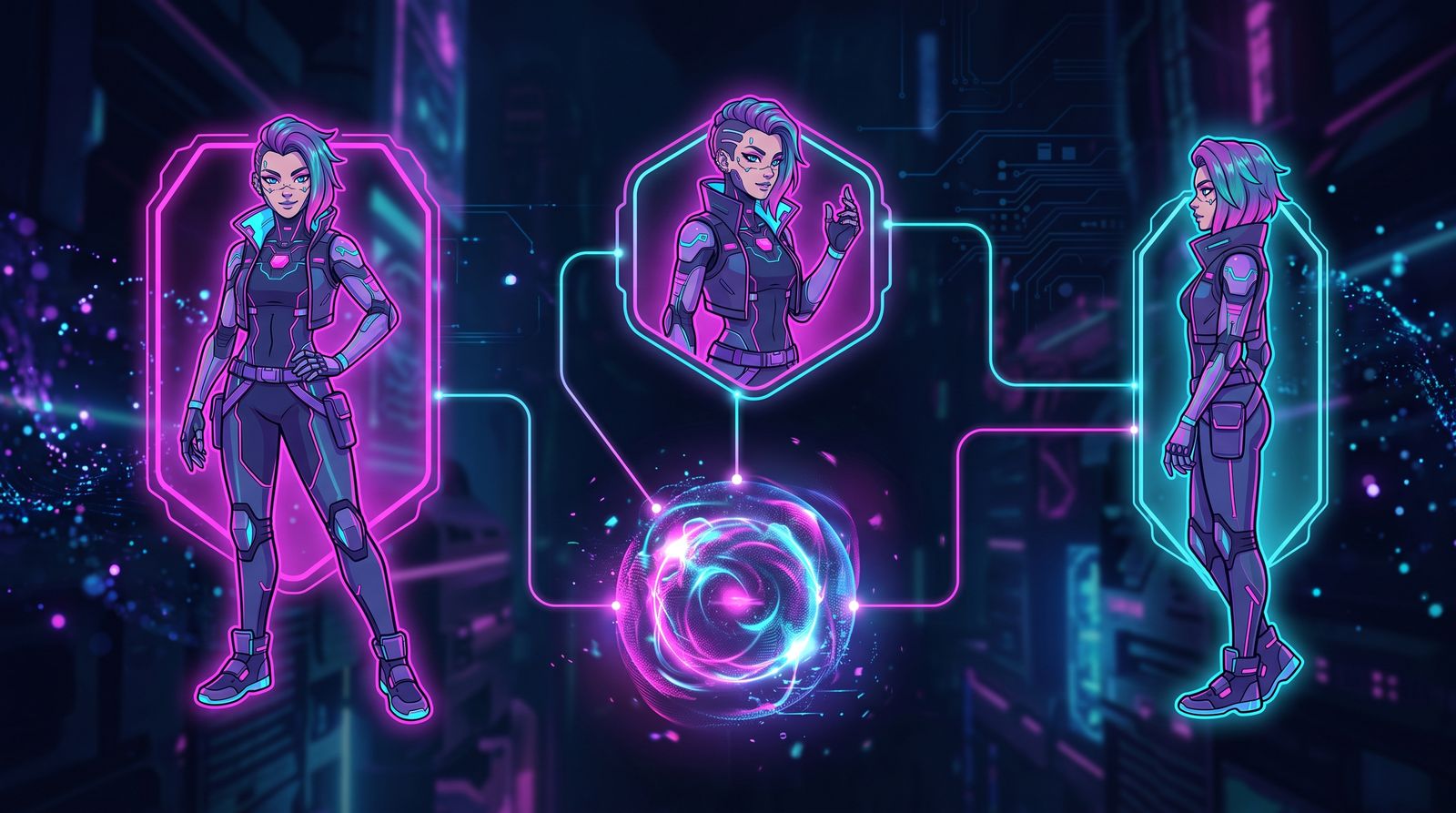
A single great portrait is easy. A character who looks like the same person across twenty scenes, outfits, and angles is the real challenge. Here is how to lock identity without losing flexibility.

A generated image with a great subject and bad light is still a bad image. Learn to use the same color, lighting, and composition language that photographers and painters use, and watch your generations stop looking generated.

The generation is only the first draft. The finishing pass, upscaling, detail repair, color grading, and selective edits, is where amateur output becomes work you would actually print, publish, or sell.

Anyone can prompt in the style of a famous artist. Far fewer can build a recognizable look of their own. Here is how style transfer works, where it falls short, and how to develop an aesthetic people associate with you.

AI will happily invent a thousand details about your world — and then contradict half of them by chapter three. Here is a working system for using AI to expand your setting without losing track of what is canon.

Synthetic narration has crossed the line from robotic to genuinely listenable. Here is how to turn a manuscript into an audiobook that people will actually finish — prep, voice choice, direction, and the editing pass that hides the seams.

An AI draft is a starting line, not a finish line. This is the editing process that turns generic, competent text into writing that sounds like you — cutting the tells, restoring the voice, and earning the byline.

A score does quiet, powerful work — it tells the audience how to feel before a word lands. Here is how to use AI music to underscore comics, videos, and interactive fiction without it turning into wallpaper.

AI video has gone from flickering curiosities to usable footage — but only if you direct it. This is a practical workflow for planning shots, holding characters and style consistent, and earning motion that does not betray the machine.

AI changed how fast you can make things — it did not change what your work is worth. Here is a practical framework for pricing AI-assisted creative work, the revenue models that actually hold up, and the mistakes that quietly erode your income.

A great portfolio is not a dump of your best renders. It is an argument for why someone should hire or follow you. Here is how to build one that signals taste, range, and reliability in a feed full of impressive images.

Who owns AI-assisted work? What can you safely sell? This plain-language primer covers the practical questions creators ask about copyright and licensing — what to check, what to put in writing, and where the genuine gray areas remain.

Creating with AI can feel solitary, but the creators who go furthest rarely go alone. Here is how to find your people, collaborate without friction, and turn a community into the engine behind your growth.

When the same tools are available to everyone, why does some AI work feel fresh and most feel interchangeable? Originality has not disappeared — it has moved. Here is where it lives now, and how to put more of yourself into the machine.